Why Client Relationships Are Your Competitive Edge today
Your SME has a choice: let AI create distance between you and your clients, or use it to get closer to them. Companies now compete primarily on customer experience — yet most are deploying AI in ways that weaken the client bond rather than strengthen it.
Here’s the reality: your 50-500 person company can’t out-automate the enterprise giants. But you can out-relationship them. The question isn’t whether to use AI—it’s how to use it without losing the human connection that built your business.
Three Ways AI Actually Strengthens Client Relationships
1. Use AI for Deeper Client Intelligence, Not Generic Responses
Stop using AI to write generic client emails. Instead, use it to analyze client data patterns. Companies that use AI to understand their clients keep more of them.
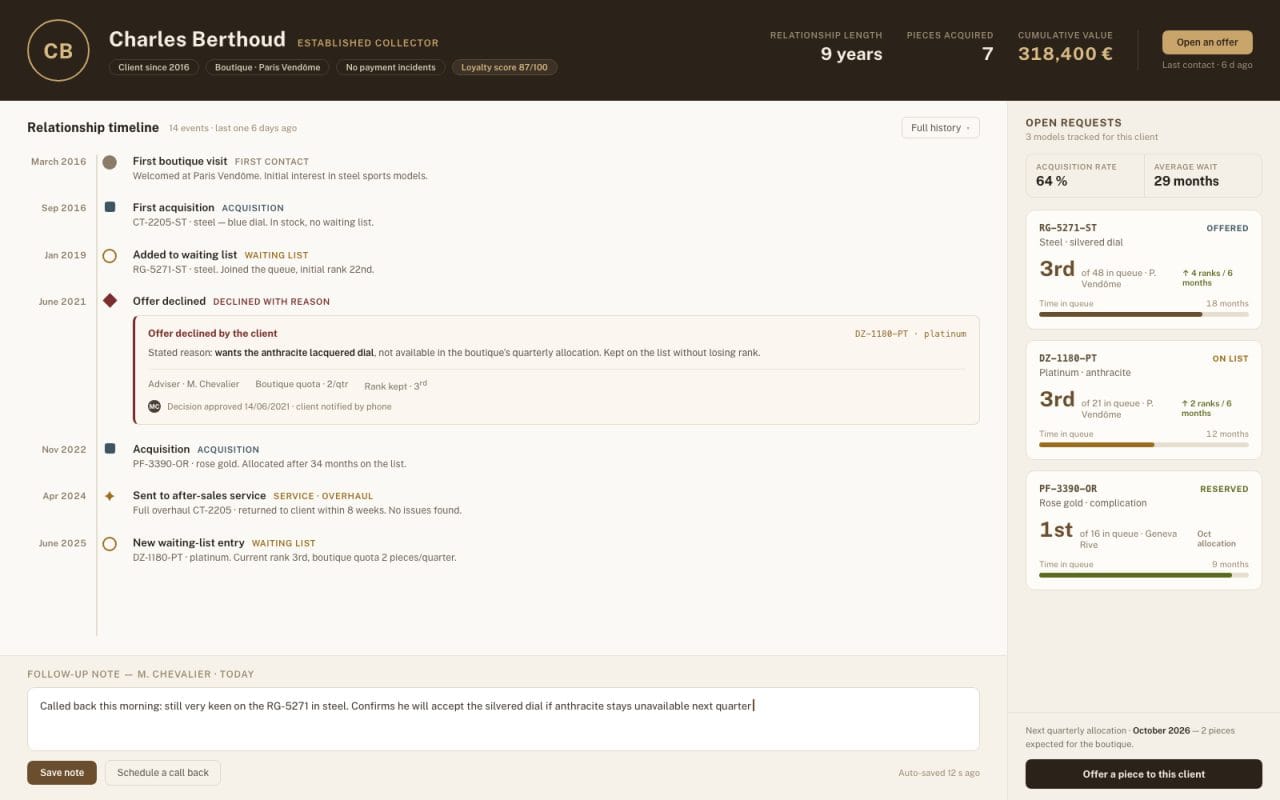
Train your AI tools on your client’s industry data, past project outcomes, and communication preferences. When you call your client about their quarterly review, you’re not reading from a script—you’re discussing specific trends affecting their sector that your AI helped you identify.
2. Automate the Administrative Work That Steals Relationship Time
Your account managers lose a large part of their week to administrative work. That is time they are not spending on the relationship. Use AI to handle project status updates, invoice generation, and meeting scheduling.
But here’s the key: be transparent about it. Tell your clients: ‘We’ve automated our project reporting so our team can spend more time understanding your evolving needs.’ They’ll respect the honesty and appreciate the extra attention.
3. Implement AI-Powered Early Warning Systems
The best client relationships are proactive, not reactive. Use AI to monitor project health, budget trends, and client satisfaction signals. Set up automated alerts when a project shows risk indicators—but have humans make the follow-up calls.
One Clarendis client implemented AI monitoring for their consulting projects. They now catch potential issues 3 weeks earlier on average, giving them time to solve problems before clients even know they exist.
The Transparency Framework That Builds Trust
Your clients are worried about AI replacing human judgment. Address this directly with a three-part transparency approach:
Explain Your AI Usage: Create a simple one-page document explaining exactly how you use AI in their projects. Be specific: ‘We use AI to analyze your website traffic patterns and identify optimization opportunities. All strategic recommendations come from our human experts.’
Show the Human Override: Demonstrate that humans review all AI outputs before they reach clients. Share examples of when your team overrode AI recommendations based on business context the technology missed.
Measure Relationship Quality: Track relationship metrics alongside efficiency metrics. Monitor response times, but also measure client satisfaction scores, project approval rates, and renewal percentages.
Implementation Roadmap for SMEs
Start with one client relationship and one AI tool. Choose your highest-value client and implement AI-powered client intelligence over 30 days. Measure the impact on relationship quality before expanding to other clients.
Focus on AI applications that give your team more time for strategic conversations, not fewer touchpoints. The goal is more meaningful human interaction, not less human interaction overall.
Remember: your enterprise competitors have bigger AI budgets, but they also have more bureaucracy. Your SME’s advantage is speed and personal attention. Use AI to amplify these strengths, not replace them.
AI Implementation Approaches: Relationship-Building vs Relationship-Damaging
| AI Application | Relationship-Building Approach | Relationship-Damaging Approach |
|---|---|---|
| Client Communication | AI analyzes data, humans craft responses | AI generates all client emails |
| Project Management | AI monitors health, humans address issues | AI sends automated problem alerts |
| Customer Service | AI routes inquiries, humans provide solutions | AI chatbot handles all inquiries |
| Data Analysis | AI identifies patterns, humans interpret meaning | AI makes recommendations without context |
Frequently Asked Questions
How do I explain AI usage to worried clients?
Create a simple one-page document detailing exactly how you use AI in their projects. Be specific about which tasks are automated versus which require human expertise. Most clients appreciate transparency over secrecy.
What AI tools work best for SME client relationships?
Start with client intelligence platforms like HubSpot's AI features or Salesforce Einstein for data analysis. Avoid AI chatbots for primary client communication—use AI for behind-the-scenes analysis instead.
How do I measure if AI is helping or hurting relationships?
Track both efficiency metrics (response times, project completion rates) and relationship metrics (client satisfaction scores, renewal rates, referral frequency). If efficiency improves but relationships suffer, adjust your approach.
Should I automate client communications?
Automate administrative communications like project status updates or invoice reminders. Never automate strategic discussions, problem-solving conversations, or relationship-building touchpoints.
How quickly can SMEs implement AI for client relationships?
Start with one high-value client and one AI tool within 30 days. Focus on AI that supports your team's client interactions rather than replacing them. Scale gradually based on measured results.
Elevate the Experience at Your Establishments
Embody this excellence daily with our Digital Welcome Booklet. A premium hotel solution, custom-designed to magnify your services and delight your most discerning clientele.
Discover the solution →A question about your specific situation? We discuss it on our forum.