
Logistics & Supply Chain
Optimise routing, tracking and reverse logistics with end-to-end supply chain management platforms.
Supply chain: when information flows poorly
The regional transport companies and 3PL providers we work with manage hundreds of references daily. Client tracking often remains manual despite having powerful business tools.
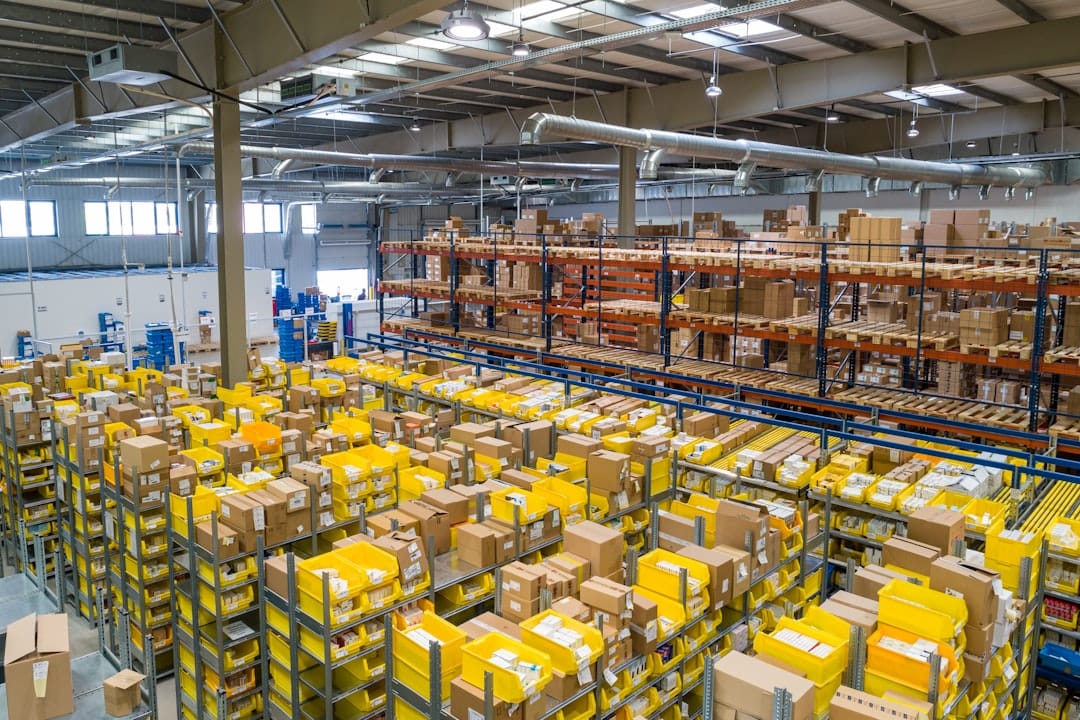
Logistics digitalisation first affects client relations. In the organisations we encounter, sales staff spend their mornings answering the same questions: "Where is my order?", "When will it be delivered?", "Have there been any problems?".
Meanwhile, operational teams juggle between several software systems: TMS for routes, WMS for warehousing, ERP for billing. These tools contain all the necessary information, but it remains siloed. Route planning is still frequently built on Excel, with the associated risks of error.
Incident traceability also raises questions. We see companies that are excellent in the field losing clients because a delay wasn't communicated early enough, or because a non-conformity wasn't followed up with structured monitoring.
The picker works from a printed list, the driver waits at the dock to be told which pallets to load, and the sales rep answers the customer without seeing either.
An urgent charter is negotiated by phone and noted in a spreadsheet. Two days later, no one can find at what rate or why that carrier was chosen.
Two approaches to streamline information
Automate client relations
Supply chain clients demand visibility, not necessarily human contact. A well-designed client portal responds to 70% of information requests without engaging sales teams. The challenge is synchronising existing business data.
Connect operational tools
Successful logistics digitalisation relies on bridges between systems. Making TMS, WMS and ERP communicate allows field teams to focus on added value rather than multiple entry of the same information.
« Clients want responsiveness, not excuses. If information exists somewhere, it should be accessible everywhere. »
Solutions for real problems
Supply chain client portals
Your clients contact your sales teams several times a week to obtain tracking information. This data exists in your TMS or dispatch management system Fewer telephone enquiries thanks to automated tracking portals, freeing up sales time for prospecting. On constructing delivery route schedules through automation of repetitive tasks and optimisation of constraints. To resolve customer incidents with a structured workflow, compared to 5 days on average before digitalisation. This family-owned business in the Lyon region managed 200 daily shipments with an excellent service level, but faced a growing administrative burden. Customers systematically called to enquire about delivery times, requiring 2 full-time staff members. We developed a customer portal connected to their TMS, enabling real-time vehicle tracking and delivery note consultation. Additionally, an automated notification system alerts recipients of delivery time slots. Results after 8 months: 70% reduction in incoming calls and redeployment of one person to commercial duties.Key Performance Indicators
Regional courier specialist
Fewer telephone enquiries thanks to automated tracking portals, freeing up sales time for prospecting.
On constructing delivery route schedules through automation of repetitive tasks and optimisation of constraints.
To resolve customer incidents with a structured workflow, compared to 5 days on average before digitalisation.
Regional courier specialist
This family-owned business in the Lyon region managed 200 daily shipments with an excellent service level, but faced a growing administrative burden. Customers systematically called to enquire about delivery times, requiring 2 full-time staff members. We developed a customer portal connected to their TMS, enabling real-time vehicle tracking and delivery note consultation. Additionally, an automated notification system alerts recipients of delivery time slots. Results after 8 months: 70% reduction in incoming calls and redeployment of one person to commercial duties.
Route orchestration
We model planning engines able to recalculate routes while factoring in traffic, volume and cold chain constraints.
Our expertise in logistics digitalisation focuses on three areas. First, creating client interfaces that leverage information already present in your systems. Then, automating repetitive processes that consume time without creating value. Finally, building operational dashboards that provide visibility on pressure points.
We work with your teams to identify reliable information sources and processes to optimise. The objective isn't to replace your business tools, but to make them communicate better with each other and with your clients.
Key Performance Indicators
Fewer telephone enquiries thanks to automated tracking portals, freeing up sales time for prospecting.
On constructing delivery route schedules through automation of repetitive tasks and optimisation of constraints.
To resolve customer incidents with a structured workflow, compared to 5 days on average before digitalisation.
Regional courier specialist
This family-owned business in the Lyon region managed 200 daily shipments with an excellent service level, but faced a growing administrative burden. Customers systematically called to enquire about delivery times, requiring 2 full-time staff members. We developed a customer portal connected to their TMS, enabling real-time vehicle tracking and delivery note consultation. Additionally, an automated notification system alerts recipients of delivery time slots. Results after 8 months: 70% reduction in incoming calls and redeployment of one person to commercial duties.
Accelerate your digital trajectory in the Logistics & Supply Chain sector
Our sector experts work with you to define the roadmap tailored to your challenges.
Book a 45-min call