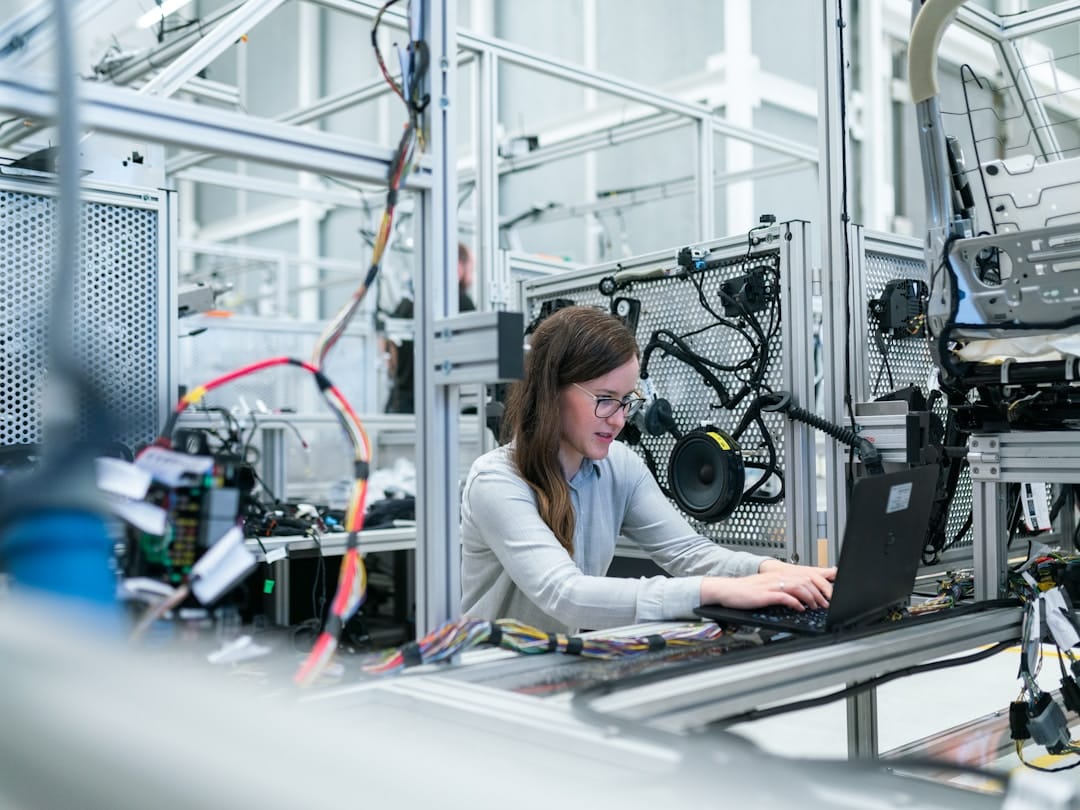
Why Industrial Digitalization Matters for SMEs
Industrial digitalization has evolved from an optional upgrade to a business imperative for small and medium enterprises. Manufacturing SMEs that carry a digital transition through to completion come out of it measurably more productive, within two years. Despite this, many manufacturing SMEs never move beyond the pilot stage into full-scale implementation.
For manufacturing SMEs with 50-500 employees, digitalization represents more than efficiency gains—it’s about survival in an increasingly competitive landscape. The European Investment Bank’s 2024 Manufacturing Competitiveness Report shows that digitally mature SMEs outperform their traditional counterparts by 23% in revenue growth and 31% in profit margins. Consider the case of precision manufacturing companies that have reduced unplanned downtime by 45% through predictive maintenance systems, directly translating to millions in saved costs.
Essential Digital Tools for Industrial SMEs
The foundation of successful industrial digitalization rests on five core technologies that work synergistically to transform operations:
- Manufacturing Execution Systems (MES): Real-time production monitoring and control with integrated quality management
- Enterprise Resource Planning (ERP): Unified business process management connecting finance, supply chain, and operations
- Industrial Internet of Things (IIoT) sensors: Equipment monitoring, environmental tracking, and predictive analytics
- Cloud-based analytics platforms: Advanced data processing, machine learning insights, and performance optimization
- Mobile and edge computing solutions: Real-time monitoring, remote control capabilities, and decentralized processing
SMEs that implement an integrated digital platform get to market faster and spend less running the business. The key lies not in adopting individual tools but in creating an interconnected architecture that enables data-driven decision making across all business functions.
Step 1: Assess Current Digital Maturity
Before embarking on digitalization, SMEs must honestly evaluate their current technological landscape. The MIT Sloan 2024 Digital Readiness Framework suggests conducting a comprehensive audit across four dimensions: infrastructure, data management, workforce capabilities, and organizational culture. Companies that assess their digital maturity honestly before they start are far likelier to hit their goals on budget and on time.
This assessment should identify technology gaps, data silos, and skill deficiencies that could impede progress. Most failed SME digital transitions come down to inadequate preparation and unrealistic expectations about what the business could already do.
Step 2: Develop a Phased Implementation Strategy
Successful digitalization follows a structured, phased approach rather than attempting wholesale transformation overnight. Work in three phases — build the foundation, integrate the core systems, then deploy advanced analytics — each measured in months rather than weeks.
Phase one focuses on establishing reliable connectivity, basic IoT sensors, and foundational data collection capabilities. Phase two integrates MES and ERP systems while implementing automated workflows. Phase three introduces artificial intelligence, machine learning algorithms, and predictive analytics. This methodical approach reduces risk and allows for course corrections based on early learnings.
Step 3: Invest in Workforce Development
Technology alone cannot drive successful digitalization—human capital development is equally critical. Manufacturing SMEs that invest in digital skills training see better adoption and a better return than those that only buy technology.
Effective workforce development includes technical training on new systems, data literacy programs, and change management initiatives. The World Economic Forum’s 2024 Future of Work Report emphasizes that companies prioritizing continuous learning and upskilling retain 89% of their workforce through digital transition, compared to 56% for organizations with minimal training programs.
Step 4: Establish Data Governance and Security Frameworks
As digitalization increases data generation and connectivity, robust governance and security become paramount. Most manufacturing SMEs hit at least one cyber incident during their digitalisation, and the bill is rarely small.
Effective data governance includes clear ownership structures, quality standards, privacy protection protocols, and security measures. NIST’s 2024 Cybersecurity Framework for Manufacturing provides specific guidelines for SMEs, emphasizing the importance of network segmentation, access controls, and incident response planning.
Step 5: Measure, Optimize, and Scale
Continuous improvement drives long-term digitalization success. Companies that measure get more out of their digital investments than companies that don’t. Key performance indicators should span operational efficiency, quality improvements, cost reductions, and customer satisfaction metrics.
Regular performance reviews enable data-driven optimization and inform scaling decisions. Successful SMEs establish monthly performance reviews, quarterly strategic assessments, and annual digitalization roadmap updates to maintain momentum and adapt to evolving market conditions.
Digital Transition Approaches: In-House vs. Cloud-Based Solutions
| Criteria | In-House Development | Cloud-Based Platforms |
|---|---|---|
| Initial Investment | €150,000-500,000 | €25,000-75,000 |
| Implementation Time | 18-36 months | 6-12 months |
| Scalability | Limited, requires planning | Immediate, pay-as-you-grow |
| Maintenance Requirements | Dedicated IT team needed | Provider managed |
| Customization Level | Unlimited | Platform dependent |
| Security Responsibility | Full internal ownership | Shared with provider |
Frequently Asked Questions
What is the typical ROI timeline for SME industrial digitalization projects?
Most manufacturing SMEs see first returns well before the programme is finished, with full payback over the years that follow. The key is a phased approach that delivers quick wins while building towards the whole.
How much should SMEs budget for industrial digitalization initiatives?
Digitalisation deserves a standing share of annual revenue, and a real part of that share must go to training and change management rather than to technology alone. This investment typically generates 15-25% productivity improvements within two years.
What are the biggest challenges SMEs face during digital transition?
Three obstacles come up again and again: resistance to change, thin technical expertise in-house, and the complexity of joining legacy systems to new ones. Proper planning and change management address most of these issues.
Can SMEs implement digitalization without significant IT infrastructure investments?
Yes, cloud-based solutions enable SMEs to access enterprise-grade capabilities without major infrastructure investments. Most successful SME digitalisations run on cloud platforms, which cut the upfront bill sharply compared with on-premises.
How do SMEs ensure cybersecurity during digitalization without dedicated IT teams?
SMEs can leverage managed security service providers and cloud-native security tools to achieve enterprise-level protection. NIST's 2024 framework recommends focusing on network segmentation, multi-factor authentication, and automated threat detection as foundational security measures.
Digitalize your industry?
Clarendis guides industrial SMEs through their digital transformation: MES, WMS, IoT and AI for your production.
See our industry solutions →A question about your specific situation? We discuss it on our forum.