
Why Custom Development Matters Now
Every business is unique, but most software isn't. Off-the-shelf solutions force you to change how you work, rather than supporting what makes you different. The result? Workarounds, inefficiencies, and teams frustrated by tools that don't fit their needs.
The acceleration of digital transformation means businesses can't wait months for the perfect solution to appear on the market. Your competitors are moving fast, and you need technology that gives you an advantage today, not something that holds you back with generic limitations.
We build software that fits your business like a glove. Our developers work directly with your teams to understand what you actually need, then create solutions that work exactly how you work. No compromises, no workarounds.
We start with your people, not our technology. Our developers spend time understanding your workflows, challenges, and goals before writing a single line of code. We build in short cycles, showing you working software every few weeks so you can see progress and make changes early.
We use proven technologies and focus on solutions that your internal teams can maintain and evolve. Every line of code is documented, tested, and built to last. We're not trying to impress anyone with fancy tech – we're solving your business problems efficiently.
Discovery
We map your workflows and identify the real problems to solve
Design
Create technical specifications and user interface mockups
Build
Develop in short cycles with regular demos and feedback
Deploy
Launch with full testing, documentation, and team training

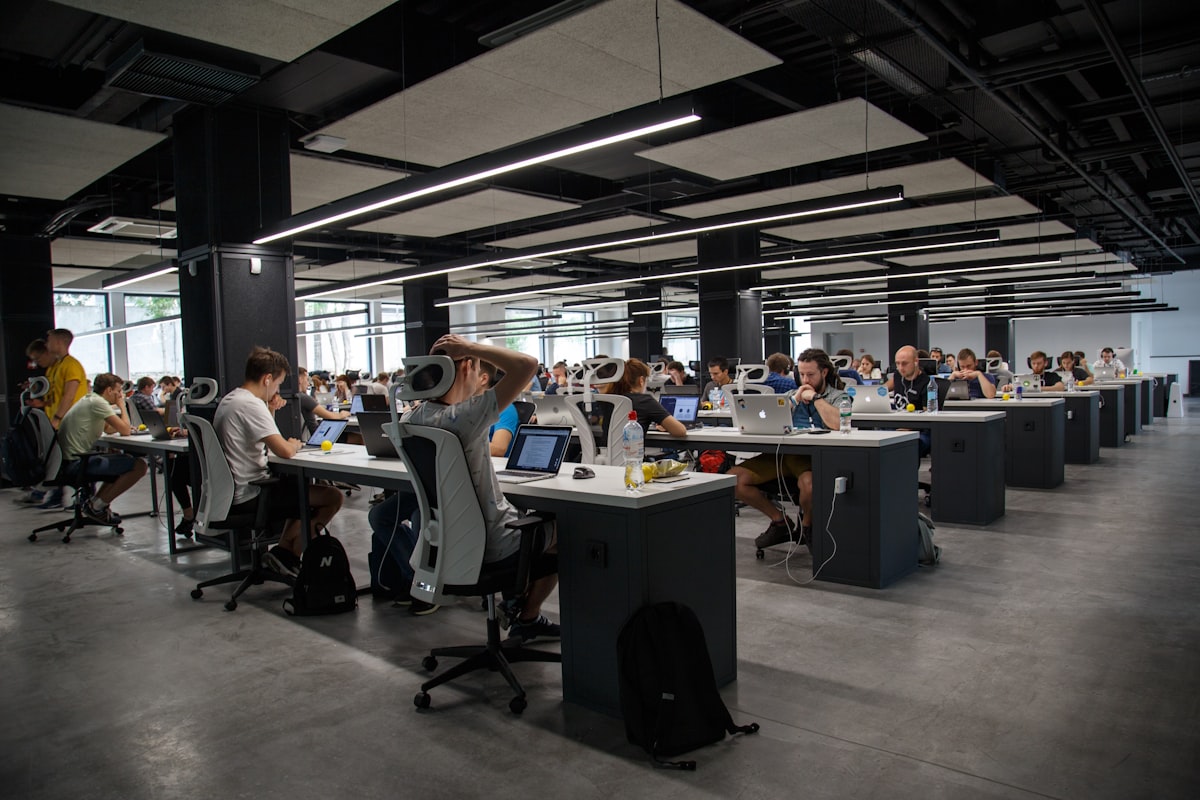
We typically work on business-critical applications that need to integrate with your existing systems. This includes customer portals, internal workflow tools, data processing systems, and APIs that connect different parts of your technology stack. These are the systems that directly impact your revenue or operations.
We also build solutions for specific industry requirements that generic software can't handle. Whether it's compliance workflows, specialised reporting systems, or customer-facing applications that reflect your brand and processes, we create software that gives you a competitive edge.
What we integrate, and what we build around it
Our speciality is integrating open source solutions. We start from proven foundations rather than a blank page, configure them around how you actually work, and build what the foundation cannot do on its own. The principle never changes: you stay in control of your system. The code stays readable, the data stays yours, and your team handles day-to-day matters without having to call us.
ERP & operations
Odoo (Community and Enterprise), Dolibarr, ERPNext
The starting point is nearly always the same: purchasing lives in one spreadsheet, stock in another, and invoicing is retyped by hand from both. We begin by mapping what is already there — the files, the unwritten rules, the habits holding it together — before choosing the foundation. We configure purchasing, stock, production and invoicing, carry the history across instead of starting from nothing, and build the modules your business needs and the standard ignores, as with a training centre ERP or a warehouse management system. The result: data entered once travels, and the gap between recorded and actual stock becomes visible rather than being discovered at month end.
E-commerce
PrestaShop, Magento (Open Source and Adobe Commerce)
We are rarely called to open a shop; we are called because a shop exists and lives apart from everything else. Displayed stock is not real stock, orders are recopied into the back office, and nobody can say where an order stands without opening three screens. We wire the shop into the operational core, put order orchestration in place once channels multiply, and separate the storefront from the sales engine where performance or a redesign calls for it — the thinking behind decoupled sales platforms and marketplace infrastructure. What changes: the site stops being an island, and your team stops retyping.
CRM
SuiteCRM, Vtiger
The trigger is almost always a departure: a salesperson leaves and their contact book goes with them, because it lived in their mailbox. We gather contacts wherever they sit — mail, spreadsheets, an abandoned tool — de-duplicate them, and configure a follow-up that fits your sales cycle instead of imposing its own. We then connect the CRM to invoicing and to the catalogue so that a quotation is generated from real data, and open a customer portal where the follow-up needs to be shared. Long cycles involving several people, such as automotive lead management, need assignment rules that we write with you.
Content & data
WordPress, Drupal, Pimcore, Strapi
The tipping point comes when the catalogue becomes unmanageable: the same product exists in three versions — on the site, in the ERP, in a sales spreadsheet — and none of them is right. We then separate the repository from its presentation. The product repository becomes the single source, maintained by the people who know the products; the site consumes that source instead of duplicating it. Depending on volume and channels, we either stay on a conventional editorial platform or move to a decoupled architecture, as with a BtoB catalogue behind an institutional site. What changes: you correct a product record in one place.
Audience measurement
Matomo, Google Analytics
The question comes up when a budget has to be decided and nobody knows what visitors actually do. We set the measurement plan before the tool: which decisions need evidence, and therefore which events are worth tracking. The choice between the two turns on your data constraints — Matomo is hosted on your own infrastructure and keeps the records under your control, which settles the question of transfers outside Europe; Google Analytics makes sense when your campaigns are already tied to it. We install it, check that what is being counted is what you think is being counted, and build the views you will genuinely look at.
Workplace
Microsoft 365
You already have it, and it sits alongside the business system: people sign in twice, documents travel as attachments, and leavers are handled by deleting accounts one at a time. We wire up authentication so a single account opens the right doors, connect mail to the applications that need to send, and back employee portals onto the directory rather than a list kept on the side. Where a unified HR repository exists, it becomes the source for joiners and leavers. What changes: access follows people, with no manual step.
Custom development, business components and modules
There is always a part no catalogue covers, and it is often the part that sets you apart: a pricing rule only you apply, a calculation inherited from your trade, a regulatory constraint specific to your sector. We write it as a component grafted onto the chosen foundation, never as a fork of the product — an interactive configurator, a promotional rule engine, a routing and route planning engine. The rule we hold ourselves to: the foundation must stay updatable, and our work must never stand in the way of that.
System interconnection
The need appears when two perfectly good tools have to share the same data without anyone retyping it. We map the existing flows, decide which system is authoritative for which data — the question that settles everything else — then build the exchanges and the error handling, because a flow that fails silently is worse than no flow at all. This is the work behind urbanising a core banking system, clinical systems interoperability and BIM-based construction site monitoring. What changes: the tools stay, the double entry goes.
One point of contact from scoping to go-live, reachable during and after.
A typical situation
A business runs part of its activity on a shared spreadsheet and a handful of improvised automations. It holds as long as nobody is away, and it seizes up as soon as volume rises or a rule changes. We start from the process as it is actually practised, and turn it into a tool that carries the same rules without depending on the person who knows them.
Custom development gives you software that works exactly how your business works. This means faster user adoption, fewer training costs, and systems that actually improve productivity rather than creating new problems. Your teams spend time on valuable work, not fighting with software.
You also get a competitive advantage that your competitors can't simply buy off the shelf. Custom software becomes a business asset that grows with you, rather than a recurring cost that limits what you can do. The right custom solution often pays for itself quickly through efficiency gains.
How long does custom development typically take?
Most business applications are delivered in stages rather than in one go: you see working software early, and we adjust as the workflow becomes clearer. We set the schedule once the scoping is done.
What if requirements change during development?
We expect requirements to evolve as you see the software take shape. Our agile approach makes it easy to adjust direction without starting over.
Can our internal team maintain the software afterwards?
Absolutely. We document everything and use standard technologies your developers can support. We also offer ongoing maintenance if you prefer.
How much does custom development cost compared to buying software?
Initial costs are higher. What you avoid is the ongoing licence for software that does not quite fit, and the workarounds that grow around it. We put both figures side by side on your own case rather than on an average.