
Employee Portals (Self-Service)
In a company of 200 employees, the HR team spends an average of 15 hours per week answering the same questions: holiday balance, employer certificates, address updates, missing payslips. Multiply by 52 weeks, and you get the equivalent of a half-time position dedicated solely to non-value-added tasks. Meanwhile, the real issues: recruitment, training, workforce planning: take a back seat.
From the employees’ perspective, frustration mounts: why does one need to send three emails and wait five days to obtain a salary certificate that the bank requires within 48 hours? Managers, meanwhile, juggle between Excel spreadsheets to validate leave requests and email follow-ups when the process breaks down. The central HRIS often exists, but its interface dates from 2012, no one really knows how to use it, and critical data ends up scattered across three tools that don’t communicate with each other.
The regulatory framework doesn’t help matters: GDPR, payslip retention, mandatory accessibility. Each workaround adds another layer of complexity.
This solution belongs to the Customer & User Portals family.
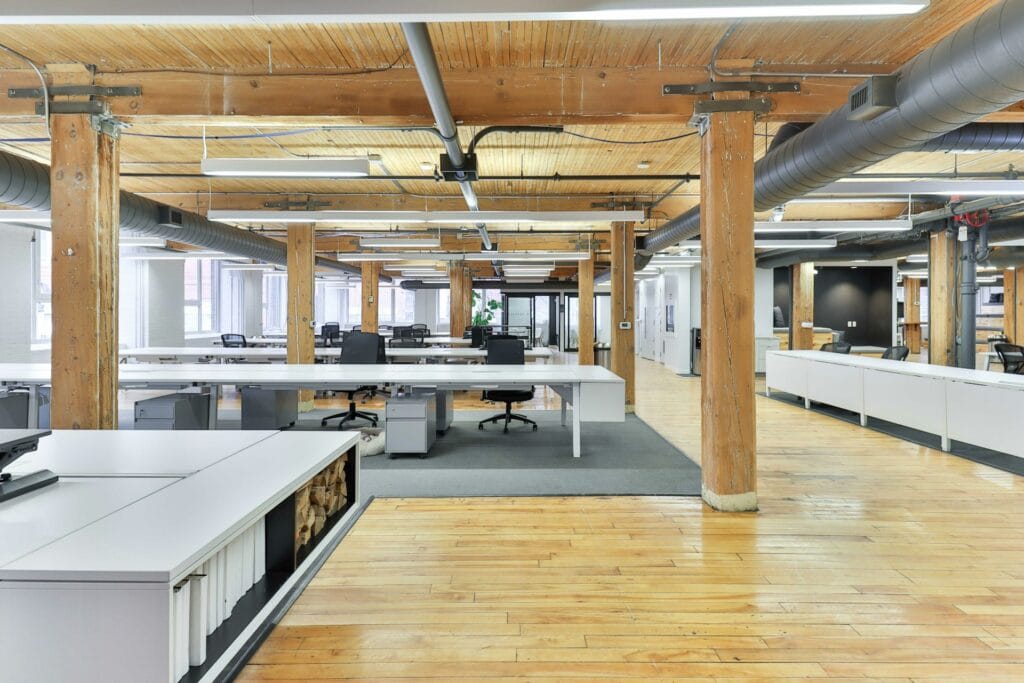
Challenges holding back your performance
Excel remains the default reflex for managing leave.Result: versions circulating by email, balances that never match payroll, forgotten carry-overs. Free or consumer tools appeal through their simplicity, but they manage neither specific collective agreements, nor multi-level validation workflows, nor legal document archiving. As for the major HRIS systems on the market, their licence costs and rigidity render them inaccessible or unsuitable for mid-cap and SME companies: six months of configuration for a result that never truly fits operational requirements.The makeshift arrangements between these different layers create vulnerabilities: personal data stored anywhere, payslips sent in plain text by email, no traceability of modifications. And when an employee disputes something, nobody can prove who validated what.
Our Technical Approach
Our approach stems from a simple observation: an employee portal is only useful if it is actually used. We therefore begin by mapping the genuine requests that reach HR: not theoretical processes, but actual emails and telephone calls.
We then build a modular foundation: secure authentication, role-based access management, and a configurable workflow engine requiring no coding. The digital vault complies with NF Z42-020 standards for evidential value archiving. Approval workflows adapt to your actual organisational structure, not a generic model: direct manager validation, then N+2 beyond five days, with exceptions for certain departments.
The interface is designed mobile-first because 60% of consultations occur via smartphone. We integrate automatic generation of standard certificates (employer, salary, attendance) using data already present in payroll. Every action is tracked, every document timestamped.
Employee Portals (Self-Service)nnDigital Strongbox
Secure personal storage (encryption) of payslips and contracts.
Employee Self-Service PortalsnnLeave & Absence Management Systems
Real-time calculation of leave balances, time off in lieu and generation of approval requests.
Generation of Certificates
Immediate PDF generation of employment certificates or mutual attestations.
Employee Portals (Self-Service)nnData Update
Interface enabling the employee to amend their bank details or postal address.
Approval Workflows
Conditional routing: submitting a week’s leave goes to the N+1, sick leave to HR.
Mobile Accessibility
Interfaces designed to be used during the commute to and from work.
Technical Architecture
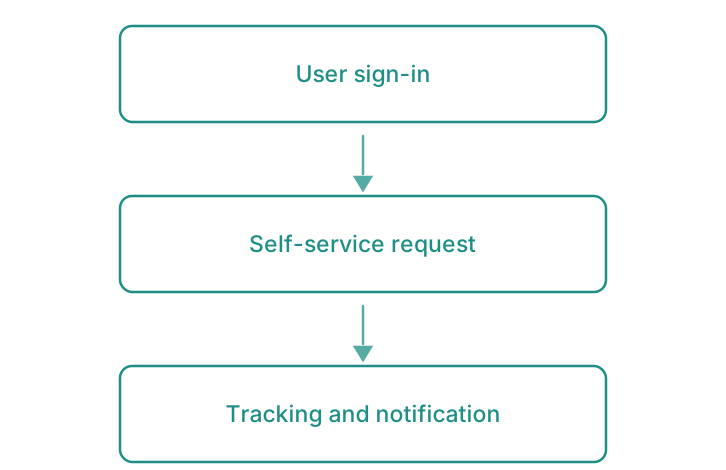
Identify the user, let them act on their own, keep them informed: Concierge Applications and One-Stop Citizen Service Centres work the same way.
- Employee Portals (Self-Service)nnDigital StrongboxSecure personal storage (encryption) of payslips and contracts.
- Employee Self-Service PortalsnnLeave & Absence Management SystemsReal-time calculation of leave balances, time off in lieu and generation of approval requests.
- Generation of CertificatesImmediate PDF generation of employment certificates or mutual attestations.
- Employee Portals (Self-Service)nnData UpdateInterface enabling the employee to amend their bank details or postal address.
- Approval WorkflowsConditional routing: submitting a week’s leave goes to the N+1, sick leave to HR.
- Mobile AccessibilityInterfaces designed to be used during the commute to and from work.
Smooth and frictionless integration
We do not replace your HRIS or payroll software. The portal connects to these systems via standard connectors or existing APIs. Data remains in your source systems: we synchronise, we do not import in bulk. Deployment is carried out service by service: first leave management, then certificates, then the digital safe.
Each stage is validated before proceeding to the next. Your IT teams retain control over hosting if they wish. We document everything, train functional administrators, and remain available after go-live.
Audit of current HR workflows
Analysis of requests received over 3 months, identification of major pain points, mapping of existing tools and data.
Configuration and integration
Configuration of priority modules, connection to HRIS and payroll, modelling of approval workflows.
Pilot on a restricted scope
Deployment to a test service, collection of feedback, adjustments prior to generalisation.
Deployment and support
Opening to all employees, training of administrators, monitoring of adoption indicators for 3 months.
Measurable results for your organisation
- 70% reduction in HR enquiries for routine administrative requests
- Average time to obtain a certificate reduced from 4 days to 2 minutes
- Employee adoption rate exceeding 85% within three months of deployment
- Zero sensitive documents transmitted via unsecured email
- GDPR compliance and legal archiving of payslips guaranteed for 50 years
- Estimated saving of 12 hours per week for a 3-person HR team
Clarifying your decision-making
How to ensure that employees will actually use the portal rather than continue to ring HR?
The portal’s ergonomics are built so that using it is faster than making a call. An employee who obtains a certificate in thirty seconds does not ring back. Clarendis supports the launch with targeted internal communication and measures adoption to adjust where needed.
Our collective agreements have very specific leave rules, can the system handle them?
The leave engine is configurable: length of service, splitting, agreement-specific days, carry-overs, caps. Your rules are modelled during scoping and tested against your real cases before go-live.